Heel pain when you take your first steps in the morning is one of the most common reasons people come to see us. Here we explain what plantar fasciitis is, why it happens and what can be done.
If you feel a sharp pain in your heel when you get out of bed that eases after walking for a while, it may be plantar fasciitis. It is one of the most common causes of foot pain and one of the problems we see most often at our clinic in Xàbia.
What is the plantar fascia?
The plantar fascia is a band of fibrous tissue that runs from the heel to the base of the toes. It works like a tie-rod that supports the arch of the foot and absorbs the impact of every step. When it takes more load than it can cope with, it becomes irritated where it attaches to the heel, and that is when the pain starts.
Most common symptoms
- Pain on the inside or underneath the heel.
- Sharp pain with the first steps in the morning or after sitting for a while.
- Improvement once the foot «warms up», and worse pain at the end of the day or after standing for a long time.
- Pain when climbing stairs or walking barefoot on hard floors.
Why does it happen?
It is usually a combination of factors: a sudden increase in activity, long hours on your feet, flat or very worn shoes, excess weight, tight calf muscles or a way of walking that overloads the fascia. That is why it is important to look at each case individually rather than just treating the symptom.
How we diagnose it
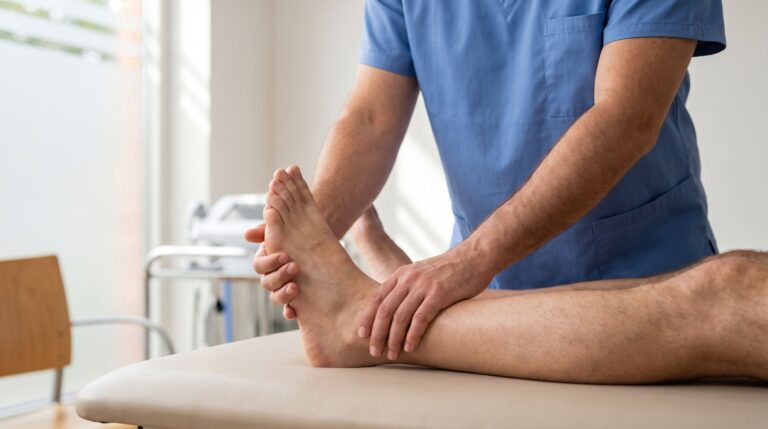
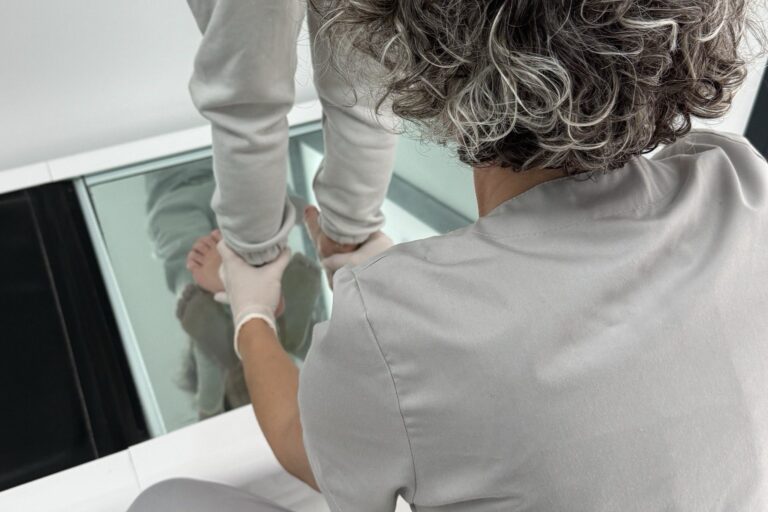
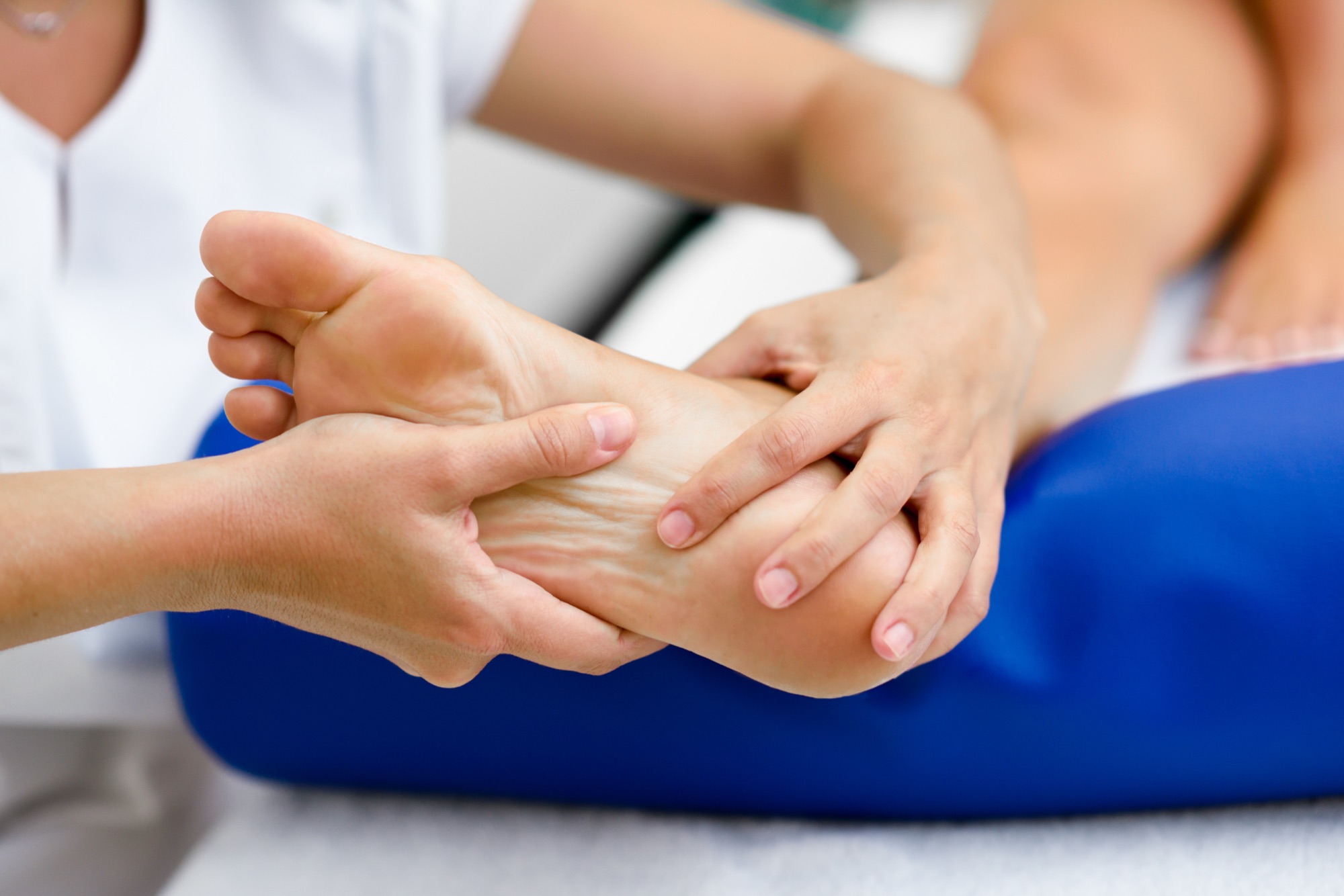
The diagnosis is mainly clinical: we listen to your symptoms and examine your foot. When useful, we use ultrasound, which shows the thickness of the fascia and rules out other injuries. With a biomechanical assessment we analyse how you walk and what is overloading the area.
Treatment
Most cases improve with conservative treatment if it is started early. Depending on the patient, the plan may include:
- Changes to your activity and footwear.
- Stretching and strengthening exercises for the foot and calf.
- Custom insoles when the way you walk is contributing to the problem.
- In persistent cases, other options such as injections, always assessed individually.
Tips you can start today
- Avoid walking barefoot on hard floors while you are in pain.
- Wear supportive shoes with a slight heel (2–3 cm) rather than completely flat ones.
- Gently stretch your calf several times a day.
- If you run or play sport, reduce the intensity for a while instead of stopping suddenly.
When should you book an appointment?
If the pain lasts more than two or three weeks, gets worse or stops you from going about your daily life, it is worth having it assessed by a podiatrist. The sooner it is treated, the easier recovery usually is.
Frequently asked questions
Does plantar fasciitis go away on its own?
Some mild cases improve with relative rest and a change of footwear, but if the cause is not corrected it often comes back. That is why we recommend an assessment.
Is it the same as a heel spur?
Not exactly. A heel spur is a small bony bump that can be seen on an X-ray and sometimes appears alongside plantar fasciitis, but the pain usually comes from the fascia, not from the spur.
This article is for general information and does not replace an in-person assessment. If you have symptoms, book an appointment and we will look at your case.