If your child plays sport and complains of heel pain, it may be Sever’s disease, the most common cause of heel pain in growing children. We explain what it is and how it is treated.
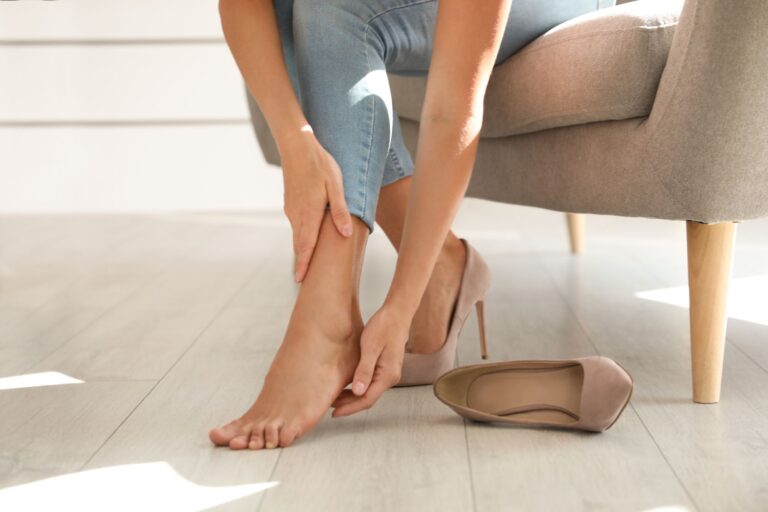
It is a familiar scene in the clinic: a boy or girl aged between 8 and 14 who plays football or basketball or does athletics, and who complains of heel pain or ends up limping after training. In many cases it is Sever’s disease, also known as calcaneal apophysitis.
It is a subject we know well: Dr Rosa Leyda devoted her doctoral thesis at the University of Valencia to studying the factors that predispose children to this condition.
What is Sever’s disease?
While a child is growing, the heel bone (the calcaneus) has an area of cartilage, the growth plate, where the Achilles tendon attaches. This area is weaker than adult bone. When it is pulled hard by the tendon and takes a lot of impact, it becomes irritated and painful. It is not a serious condition, it leaves no lasting effects if it is managed well, and it disappears once the bone has finished growing.
Symptoms that should make you think of it
- Pain at the back or sides of the heel, in one or both feet.
- Discomfort during or after sport that improves with rest.
- Limping at the end of training or the next day.
- Pain when the sides of the heel are squeezed.
- A tendency to walk on tiptoe to avoid putting weight on the heel.
Why does it happen?
It usually coincides with a growth spurt, when the bones grow faster than the muscles and the Achilles tendon pulls harder. Other factors include the amount of training, running and jumping on hard surfaces, unsuitable sports shoes, tight calf muscles and the way each child walks. That is why there is no single cause and each case should be assessed individually.
How we diagnose it
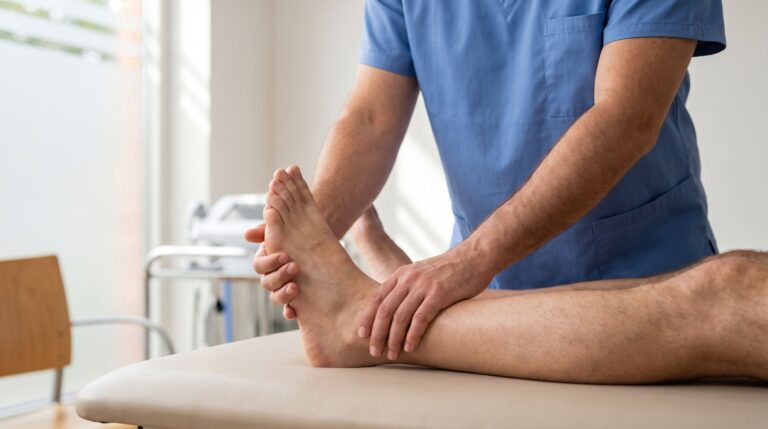
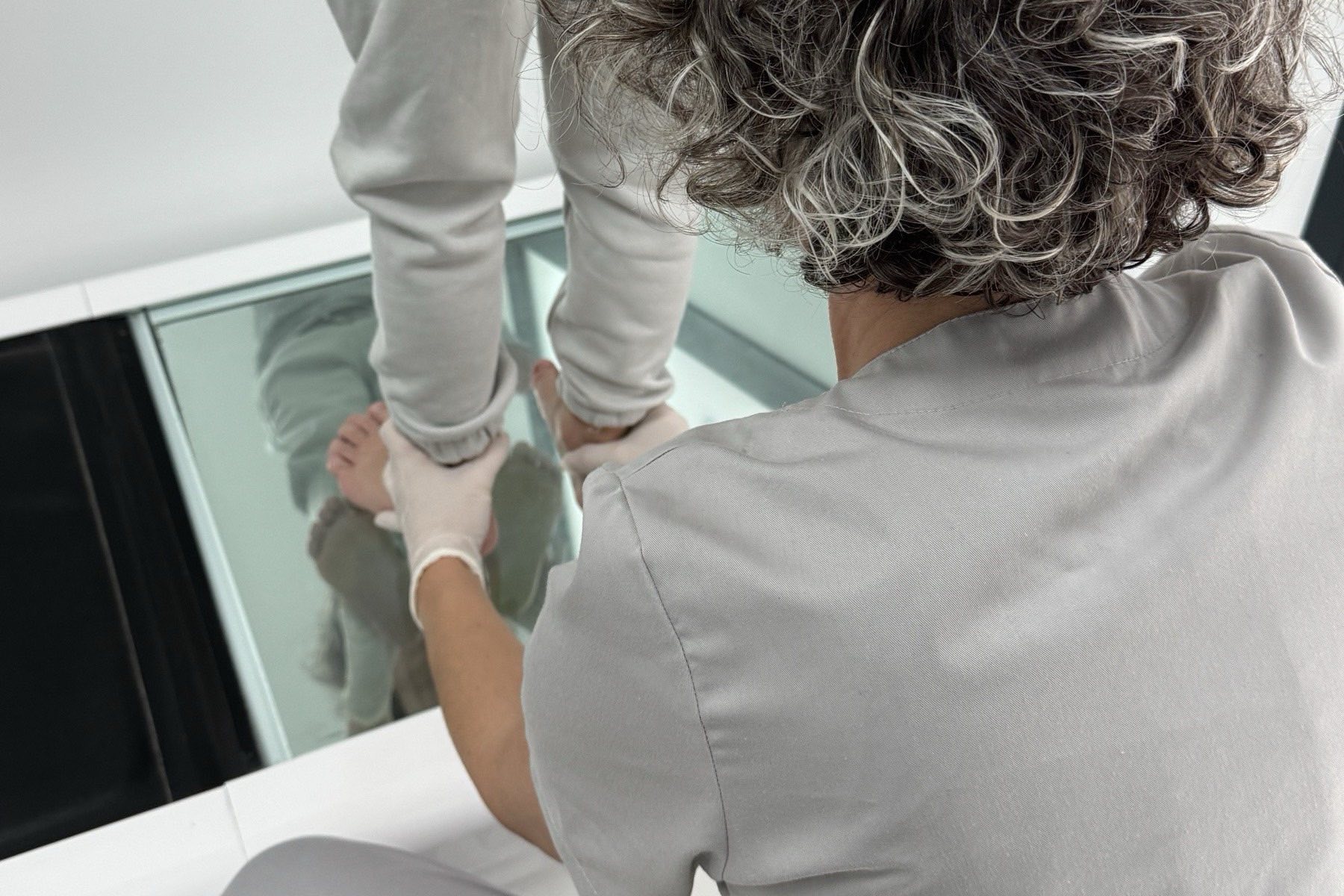
The diagnosis is clinical: we ask when it hurts, examine the heel and assess flexibility and the way the child walks with a biomechanical assessment. We only request imaging when there is doubt or the symptoms do not fit, to rule out other causes.
Treatment
The aim is for the child to be pain-free without having to give up sport unless it is necessary. Depending on the case, the plan may include:
- Adjusting the training load during the weeks when the pain is worst.
- Applying ice after activity.
- Gentle calf stretches, adapted to the child’s age.
- Checking sports shoes: good cushioning at the heel and soles in good condition.
- Heel cups or custom insoles that reduce the pull of the tendon and the load on the heel.
You can read more about how we look after children’s feet on our children’s podiatry page.
When to see us without waiting
- If the pain does not improve after a few days of relative rest.
- If it also hurts at rest or at night.
- If the heel is swollen, red or warm, or there is a fever.
- If the pain started after a knock or a fall.
Frequently asked questions
Does my child have to stop playing sport?
Not always. Often it is enough to reduce the intensity for a few weeks and adapt their footwear. We assess each case so they can keep playing sport without pain.
Can it leave lasting effects?
It does not usually leave any. The pain disappears when the growth plate of the heel closes, at the end of growth. The important thing is to keep the symptoms under control in the meantime.
Does my child need an X-ray?
Usually not. The diagnosis is made by examination. Imaging is only requested if there is doubt or the symptoms do not fit.
Can it come back?
Yes, it can come back during another growth spurt or when training increases. Insoles or heel cups and stretching help to prevent it.
This article is for general information and does not replace an in-person assessment. If you have symptoms, book an appointment and we will look at your case.