If the inside of your ankle hurts and you notice the arch of your foot gradually dropping, it may be posterior tibial tendon dysfunction. Catching it early makes a big difference to the outcome.
Many people think flat feet are something you are born with. But there is a type of flat foot that appears in adulthood and usually starts with pain on the inside of the ankle: posterior tibial tendon dysfunction.
What does the posterior tibial tendon do?
It is the tendon of a leg muscle that runs behind the ankle bone, on the inside, and attaches to the sole of the foot. It is one of the main supports of the arch of the foot. When it becomes inflamed, degenerates or stretches, it can no longer hold the arch properly and the foot gradually flattens.
Symptoms
- Pain and swelling on the inside of the ankle, behind the bone.
- Tiredness or pain when walking for a long time or standing.
- The arch of the foot drops and the heel tilts outwards.
- Difficulty standing on tiptoe on the affected foot alone.
- In more advanced stages, pain on the outside of the ankle as well.
Who does it affect?
It is more common from the age of 40 and in women. Excess weight, some conditions such as diabetes or high blood pressure, an existing flat foot, old ankle injuries and activities that overload the tendon all play a part.
Why it is worth catching early
In the early stages the tendon is inflamed but the foot is still flexible, and conservative treatment usually works well. If it is left to progress, the foot becomes rigid and treatment becomes more complicated. That is why persistent pain on the inside of the ankle deserves an assessment.
How we diagnose it
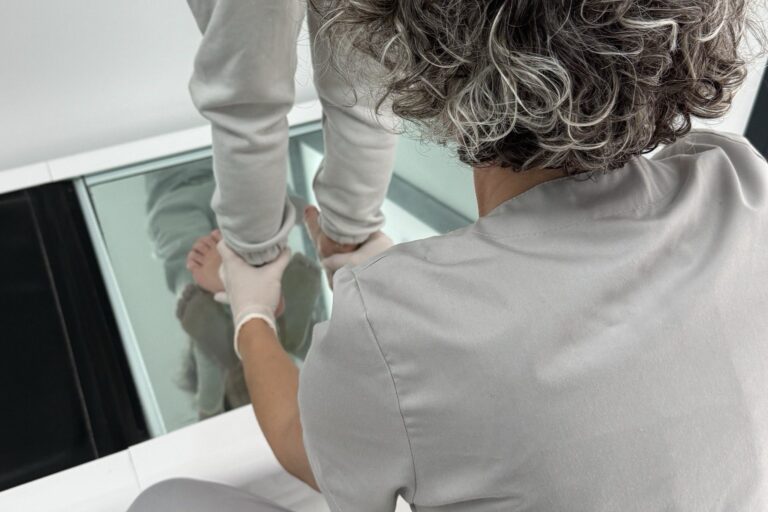
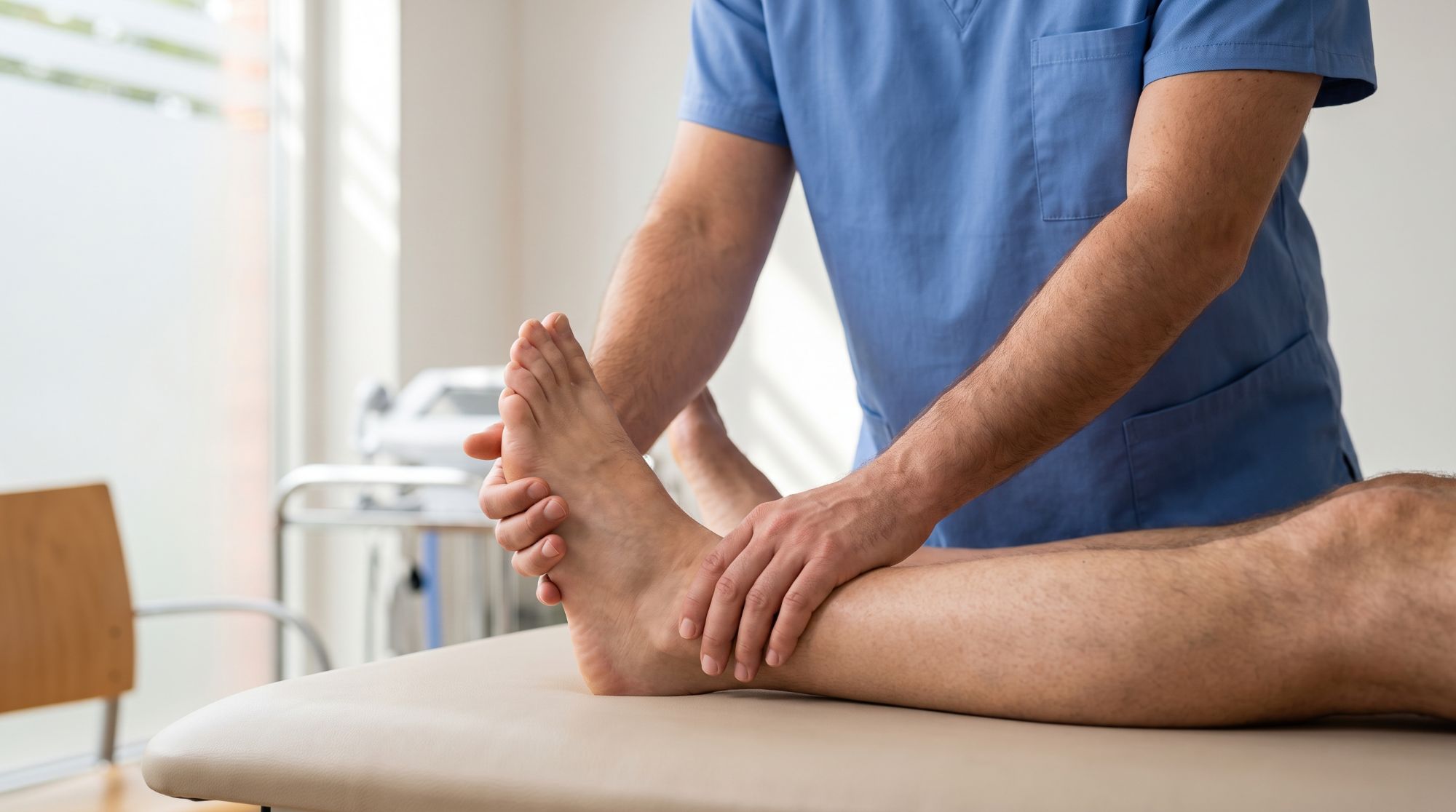
We examine the foot standing and at rest, the strength of the tendon and the shape of the arch, and analyse the way you walk with a biomechanical assessment. Ultrasound lets us see the condition of the tendon at the same appointment and, if needed, we complete the assessment with an X-ray.
Treatment
It depends on the stage. In the early stages it usually includes:
- Temporarily reducing the activities that put most load on the tendon.
- Custom insoles that support the arch and offload the tendon.
- Stable footwear with a firm heel counter.
- Progressive strengthening exercises, tailored to your case.
- When the pain is severe, temporary immobilisation with an ankle brace or a boot.
When the foot has already become deformed and does not respond to conservative treatment, surgery is considered.
Frequently asked questions
Can adult flatfoot be treated?
In the early stages, treatment with insoles, suitable footwear and exercises usually controls the pain and slows down the progression. That is why it is important to see us early.
Will I have to wear insoles forever?
It depends on the case. For many people insoles are part of long-term treatment, because they support the arch and protect the tendon.
Can I keep walking or playing sport?
Generally yes, adjusting the intensity. We will tell you which activities to cut down on while the tendon recovers.
Can the tendon rupture?
It can rupture in very advanced stages, although this is uncommon. An early diagnosis reduces that risk.
This article is for general information and does not replace an in-person assessment. If you have symptoms, book an appointment and we will look at your case.